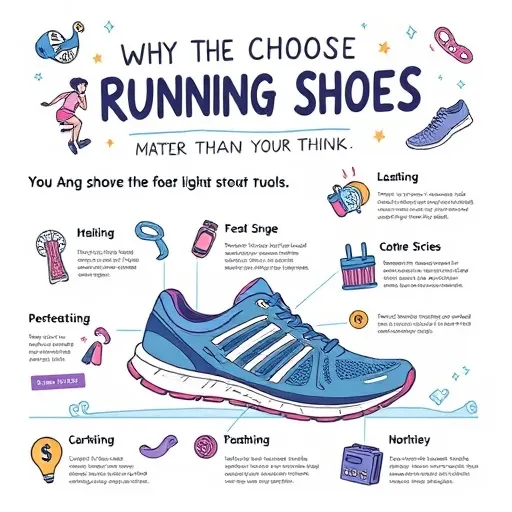
Choosing running sho
Why the Right Running Shoes Matter More Than You Think
Here's what most new runners don't get until they've already felt it in their shins: every single stride sends a shockwave through your body equal to two or three times your body weight. That force hits your feet and ankles first, which is exactly why learning how to choose running shoes for beginners isn't some minor detail — it's the foundation of your whole running life. The right pair spreads out that impact, works with your natural gait, and cuts way down on overuse injuries like shin splints and plantar fasciitis. Seasoned running coaches and physical therapists all say the same thing: beginners get hurt most often because their muscles, tendons, and connective tissues simply haven't adapted to the demands of running yet. Good running shoes are your first line of defense. Going cheap here is like pouring a house foundation on loose sand — everything built on top of it suffers.
Understanding Your Foot Type, Pronation Pattern, and Gait Analysis
Before you even glance at a wall of shoes, you've got to figure out how your foot actually behaves when it lands. That's your pronation pattern, and honestly, it's the single biggest factor in the whole selection process. When you're figuring out how to choose running shoes for beginners, this step comes first for a reason.
There are three main types. Neutral pronation means your foot rolls inward just slightly to soak up shock, then pushes off evenly — the most efficient pattern, and neutral running shoes will suit you fine. Overpronation means your foot rolls inward too much, which strains your arch and invites injury; that's where stability shoes with medial support come in. Then there's underpronation (also called supination), where your foot rolls outward and stresses the outer edge — cushioned neutral shoes usually handle that best.
Not sure which camp you're in? Try the classic wet foot test: wet your foot, step on a piece of paper, and look at the imprint. A full arch shape points to overpronation, a narrow sliver suggests underpronation, and anything in between means you're probably neutral. Want something more precise? Plenty of specialty running stores offer free gait analysis with treadmill video — a service veteran marathon runners swear by. Your arch height matters too: high arches usually want more cushioning, while flat feet often benefit from motion control features. A podiatrist or an experienced staff member at a specialty retailer can help you sort it out if the wet test leaves you scratching your head. This is the heart of how to choose running shoes for beginners — skip it and you're guessing.
Knowing Your Shoe Categories: Neutral, Stability, Motion Control, and Trail Options
The market feels overwhelming at first, but almost everything falls into a handful of clear buckets. Get these straight and your choices shrink fast. Anyone serious about how to choose running shoes for beginners needs this map in their head.
- Neutral cushioned shoes — the workhorses of the running world and the best starting point for most beginners with a neutral gait. They prioritize comfort and shock absorption without extra stability features. If you're unsure where to begin, a neutral cushioned shoe from a reputable maker is rarely a bad call.
- Stability shoes — built for overpronators, with a denser midsole on the inner side to limit excessive inward rolling. Today's versions are way lighter and less intrusive than older models; an industry pro will tell you they feel surprisingly close to neutral shoes now.
- Motion control shoes — maximum support for severe overpronation or very flat feet. Heavier and stiffer, so they're reserved for runners who genuinely need that level of control.
- Trail running shoes — heading for dirt paths and rocky terrain? These bring aggressive outsoles for grip and rock plates for protection. Sticking to roads and sidewalks for now? Skip them — but keep them in mind as your running evolves.
- Minimalist and barefoot-style shoes — these mimic running barefoot with barely any cushioning. Some experienced runners love them, but they're generally not recommended for beginners. Your body needs time to adapt, and jumping straight in is a recipe for injury.
Getting the Fit Right: Sizing, Toe Box Room, and Heel Lock Tips
Even a perfect model causes misery if the fit is off. When you're learning how to choose running shoes for beginners, fit checks deserve real attention. Size up about half a size from your casual shoes — your feet swell during runs and your toes need room to splay. You want roughly a thumb's width between your longest toe and the front of the shoe. Your heel should sit snug with zero slipping, held by a solid heel counter. The midfoot should hug comfortably without pinching. And try them on late in the day, since feet expand over the hours — an afternoon fitting gives you a truer read on size.
Always test shoes with the socks you'll actually run in — moisture-wicking running socks, not cotton crew socks. Walk or jog around the store before committing. The best retailers let you test on a treadmill or outside, so take advantage.
Decoding Cushioning, Heel-to-Toe Drop, and Midsole Foam Technology
Two technical specs deserve a closer look. Cushioning is the midsole foam that absorbs impact — and in 2026, advanced foam technologies have made shoes lighter and more responsive than ever. Beginners generally do well with moderate-to-high cushioning, especially on hard surfaces like pavement. Max-cushion shoes are popular for good reason: they're forgiving on joints while your body adapts. Then there's heel-to-toe drop, the height difference between heel and toe, usually in millimeters. Traditional shoes run an 8–12mm drop, while lower-drop options (4–6mm) encourage a more midfoot strike. Beginners often thrive with a moderate 8–10mm drop since it's gentler on the Achilles tendon and calves during the adaptation phase. Yep — this stuff matters when you're figuring out how to choose running shoes for beginners.
Budgeting Wisely and Shopping Smart at Specialty Running Stores
Good news: you don't need to spend a fortune. Premium shoes can run well past $150, but plenty of excellent beginner-friendly picks live in the $80–$130 range. Fit and function beat price tags every time. Look for previous-season models — retailers discount them heavily when new versions drop. Don't buy on looks alone; that flashy design means nothing if the shoe fights your gait. Check the return policy, since many specialty retailers offer generous trial periods where you can run for weeks and exchange if things don't work out. And plan to replace shoes every 300–500 miles — keep a simple log to track mileage.
You can absolutely buy online, but for a first pair, visiting a specialty running store is worth the trip. Staff watch you run, measure your feet, and recommend based on your individual needs — no algorithm replicates that. Shopping online instead? Stick with retailers offering free returns and detailed sizing guides, and read reviews from runners with similar foot profiles. One more thing: don't get seduced by trending styles or what a celebrity athlete wears. What works for a 120-pound elite marathoner is irrelevant to a beginner logging their first 5K.
Breaking Them In and Dodging Common Beginner Mistakes
Once you've got your pair, ease in — short runs and walks first, gradually building distance over a couple of weeks. Watch for hot spots that could turn into blisters, and don't hesitate to exchange within the trial window if something feels off. And avoid the classic blunders: buying shoes that are too small (by far the most common error), choosing style over function, ignoring gait analysis, wearing worn-out shoes with uneven wear, and overcomplicating things. Beginners don't need carbon-plated racing shoes or advanced performance tech — keep it simple. That's really the whole game with how to choose running shoes for beginners: understand your foot, get fitted right, match the category, stay in budget, and break them in gently. The perfect shoe is just the one that lets you get out the door comfortably, consistently, and injury-free.